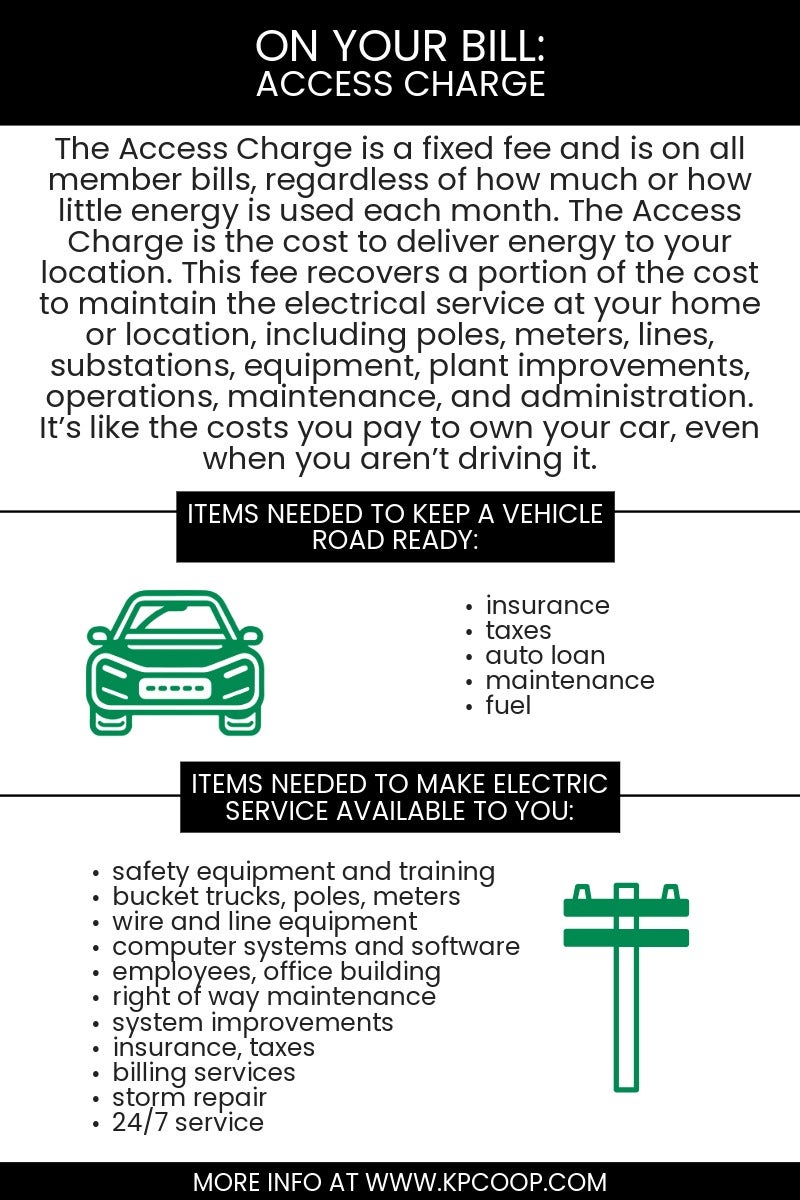
The Access Charge is a fixed monthly fee (or fixed monthly charge) that electric cooperatives use to recover the essential, non-energy-related costs of delivering power. It is a flat monthly fee on your electric bill that covers the fixed costs of maintaining the electric distribution system. This charge applies regardless of how much electricity a member uses. It is a fair and transparent way to cover fixed costs required to provide reliable electricity. Other utilities sometimes call this fee the Facilities Charge, Service Availability Charge, Customer Charge, or Basic Service Charge.
The cooperative still incurs the same cost to keep your service available, covering expenses like maintaining lines, poles, and meters. The infrastructure must still be maintained and ready to deliver power at any time. Every member benefits from a reliable electric grid, even if they use little electricity. You are paying for access to reliable power, not just the energy you consume.
The Access Charge covers fixed costs for infrastructure that do not vary with energy consumption but are essential for reliable service. These costs include: poles, wires, transformers, meters, substations, metering equipment, fleet vehicles, trucks, tools, and maintenance, administrative support and billing systems, and the labor/personnel to maintain them.
Electric cooperatives are responsible for building and maintaining the entire distribution network that brings power to each member. Co-ops often serve rural regions with fewer meters per mile of line, meaning the cost per member is higher. Rural electric cooperatives have significant fixed costs for infrastructure.
Raising only the variable per-kWh rate would unfairly burden members who use more electricity. The Access Charge ensures that every member pays their share of the fixed costs, minimizing cross-subsidization. Collecting fixed charges through a fixed fee ensures financial health and supports reliability.
Raising it is necessary to keep up with rising infrastructure and maintenance costs. Costs for materials, labor, and maintenance have risen significantly. The current Access Charge does not cover a fixed cost deficiency identified in cost-of-service studies. Raising the fee ensures necessary infrastructure investment, reliability, and compliance with financial policy goals. This includes investing in grid modernization, cybersecurity, and storm resilience. Raising the facilities charge also helps avoid unfairly shifting costs to high-usage members.
This structure helps stabilize cooperative finances against market and weather fluctuations. It is a shift to better reflect the true cost of maintaining the grid. This structure decouples sales from revenue, reducing reliance on variable charges, which enables long-term planning and investment in system upgrades for safety and reliability. When the fixed charge keeps up with fixed costs, it reduces the price of energy usage. It helps stabilize energy rates and ensures fairness across all usage levels.
Members with lower energy usage may see a slightly higher bill due to the fixed charge. Conversely, members with higher usage may benefit from more stable energy rates. The fee structure is based on the average cost of serving each member type, reflecting service size and complexity. Larger service connections pay higher fees; smaller residential members pay less.
The fee is reviewed and set by your elected Board of Directors. The fee supports cooperative principles of democratic member control. The co-op reviews all rates regularly to ensure they reflect actual costs and remain fair to members. As a cooperative, we don't profit from rate increases; every dollar goes back into maintaining and improving your service. No, you cannot reduce or avoid this charge. It's a fixed cost that applies to all members equally, regardless of usage.
Budget billing accounts will be evaluated to ensure your budget is appropriate for the Access Charge adjustment. If your budget needs to go up, KPC will automatically raise your monthly budget amount for the February billing so your budget does not fall behind.